.svg "header-logo")


The model is particularly suited to well-defined administrative and support processes such as medical billing and coding, claims processing, health information management, patient scheduling, customer service, finance and IT.
The benefits, however, are not automatic. Healthcare organizations handle sensitive data, operate within strict regulatory frameworks and depend on accuracy across processes that can affect reimbursement, patient experience and continuity of care. Outsourcing therefore works best when organizations choose the right functions, establish clear performance standards and maintain strong oversight of security, compliance and quality.
That balance matters as healthcare providers continue to face considerable operating pressure. In 2025, almost 60% of U.S. hospital expenses went toward workforce costs, according to the American Hospital Association (AHA).[1] Demand for specialist administrative skills is also continuing: the U.S. Bureau of Labor Statistics projects about 14,000 openings for medical records specialists each year between 2025 and 2035.[2]
For healthcare leaders, the question is therefore less about whether outsourcing is inherently good or bad and more about where it can improve operations without creating unacceptable clinical, compliance or business risk.
Content guide
- What is healthcare outsourcing?
- What are the main benefits of healthcare outsourcing?
- What are the disadvantages and risks of outsourcing healthcare services?
- Which healthcare functions should not be outsourced?
- What healthcare services can be outsourced?
- How should healthcare organizations choose an outsourcing provider?
- How should healthcare outsourcing performance be measured?
- Is healthcare outsourcing right for your organization?
What is healthcare outsourcing?
Healthcare outsourcing is the use of an external provider or dedicated external team to perform specific functions that would otherwise be managed internally.
The scope can range from healthcare-specific processes such as medical coding, billing, claims administration and medical transcription to broader business functions such as accounting, recruitment, customer support and technical support.
MicroSourcing’s healthcare outsourcing services, for example, support organizations across healthcare administration and business operations while allowing the client to retain control over workflows, standards and day-to-day priorities.
Healthcare outsourcing is not the same as transferring responsibility for the entire operation to a third party. A healthcare organization may outsource one process, part of a process or a complete support function. The appropriate model depends on the organization’s objectives, internal capacity, regulatory obligations and appetite for operational change.
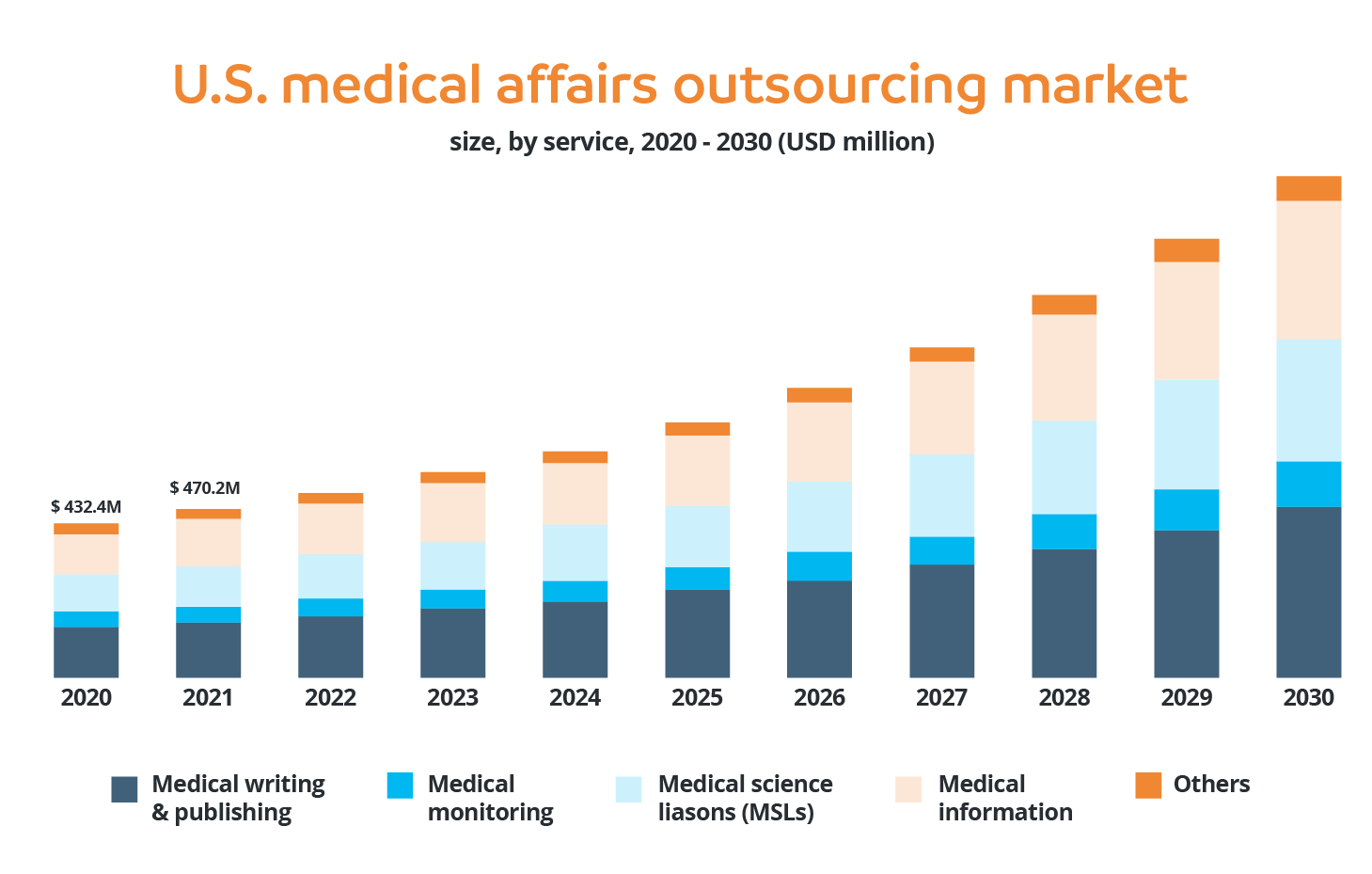 Source graph here: 5 benefits of outsourcing in healthcare (microsourcing.com)
What are the main benefits of healthcare outsourcing?
The strongest case for outsourcing usually combines several operational benefits rather than focusing solely on labor cost.
1. More flexible control over operating costs
Healthcare organizations have substantial fixed workforce and infrastructure costs. Outsourcing selected functions can change the cost structure by reducing the need to recruit, accommodate and support additional internal employees.
This can be particularly useful when an organization is growing, experiencing high transaction volumes or needs additional capacity without expanding every supporting function internally. Cost assessments should look beyond salary comparisons. A sound business case considers recruitment, onboarding, management, technology, facilities, training, turnover and vendor costs as well as the cost of maintaining appropriate governance.
The objective is not simply to find the lowest-cost provider. It is to determine whether the organization can achieve the required service level at a sustainable total cost.
2. Access to specialized talent
Healthcare administration increasingly requires people with knowledge of specialized systems, terminology, workflows and regulatory requirements.
Medical records specialists, for example, translate healthcare services and patient information into standardized codes used for reimbursement and other purposes. The U.S. Bureau of Labor Statistics expects employment in this occupation to grow 8% from 2025 to 2035, faster than the average for all occupations.[2]
Outsourcing can widen the available talent pool for roles where an organization is experiencing recruitment constraints or needs to build a team quickly. This can include dedicated medical billing and coding specialists, claims analysts and medical transcription specialists working within an organization’s established systems and procedures.
3. Greater capacity for internal healthcare teams
Administrative workload competes with the time healthcare professionals and managers have available for higher-value work. The American Medical Association continues to identify administrative burden and staffing shortages as important systemic pressures on physicians and healthcare organizations.[3]
Outsourcing does not solve those pressures on its own, but it can redistribute appropriate work. When repetitive or process-driven activities are assigned to a dedicated support team, internal employees can spend more of their time on responsibilities that require their specific clinical, technical or organizational expertise.
For example, a healthcare provider may use an external team to support appointment administration, insurance verification, billing, record maintenance or patient communications while its clinical employees remain responsible for clinical decisions and care. The operational benefit is additional capacity, rather than an assumption that outsourcing itself will directly improve patient outcomes.
4. Better ability to scale processes
Healthcare demand is rarely static. Patient volumes, claims workloads, enrollment activity, new facilities, acquisitions, seasonal patterns and service launches can all change staffing requirements. Building every function around peak demand can leave an organization with excessive fixed capacity. Building only for normal demand can create backlogs when volumes rise.
An outsourced team can provide another way to scale a defined function over time, provided the provider has suitable recruiting capacity and the organization has documented processes that new employees can follow. This is especially useful for high-volume functions such as claims processing, scheduling, billing, records administration and customer or member support.
5. More structured processes and accountability
Outsourcing requires organizations to define what work is being transferred, who owns it and how performance will be measured. Done well, that process can expose unclear workflows and create greater operational discipline.
Service standards can cover measures such as:
- turnaround time
- coding or data accuracy
- claims processing time
- backlog volume
- first-contact resolution
- abandonment or response rates
- quality assurance results
- productivity
- escalation rates
- compliance exceptions.
Those measures should reflect the purpose of the outsourced process rather than relying on generic productivity targets.
What are the disadvantages and risks of outsourcing healthcare services?
The same characteristics that make healthcare processes suitable for outsourcing—large data volumes, repeatable workflows and specialist administrative work—also make provider selection and governance particularly important.
1. Data privacy and cybersecurity risk
Healthcare organizations routinely manage protected and highly sensitive information. Giving another organization or workforce access to that information expands the environment that needs to be secured. This is not a theoretical concern. In March 2026, the U.S. Department of Health and Human Services (HHS) announced a HIPAA settlement involving a healthcare software business associate following a breach affecting 15 million people.[4]
An outsourcing decision should therefore include a detailed security assessment covering matters such as identity and access management, endpoint controls, network security, data handling, incident response, monitoring, employee access, business continuity and subcontractors. Healthcare organizations should also determine exactly what information an external team needs. Access should be aligned with the employee’s role rather than providing broader system permissions for convenience.
2. Additional compliance obligations
Outsourcing a process does not mean an organization can outsource its responsibility for managing regulatory risk. Requirements depend on the countries, services and data involved. For U.S. organizations subject to HIPAA, an outsourcing provider may qualify as a business associate when it creates, receives, maintains or transmits protected health information on behalf of a covered entity.
HHS states that covered entities generally need an appropriate written business associate agreement (BAA) in these circumstances. The agreement must define permitted uses and disclosures of protected health information and require appropriate safeguards, among other provisions.[5]
Organizations operating in other jurisdictions need to assess the privacy, healthcare, employment, data-transfer and industry-specific rules that apply to their circumstances. Compliance should therefore be part of provider due diligence and solution design, not an exercise completed after the team has already been established.
3. Quality can suffer without clear controls
Externalizing a process does not automatically make it more accurate. Quality depends on factors such as recruitment standards, training, documentation, supervision, quality assurance, access to subject-matter experts and the clarity of the organization’s own procedures.
This is especially important for processes such as medical coding, billing, record administration and claims work, where errors can create rework, delays, financial consequences or compliance problems. Organizations should establish expected quality levels before outsourcing begins and agree on how work will be reviewed, reported and corrected.
4. Poor integration can create new inefficiencies
A technically capable external team can still underperform if it is disconnected from the organization it supports. Healthcare outsourcing frequently requires employees to work across EHRs, practice management systems, billing platforms, CRM systems, internal communication channels and established escalation processes.
If access is slow, responsibilities are unclear or information is repeatedly transferred between internal and external teams, outsourcing can simply move a bottleneck rather than remove it. Process mapping should therefore happen before work is migrated. Organizations need to understand inputs, outputs, dependencies, exceptions and decision points as well as the task itself.
5. Overdependence on a provider can become an operational risk
As an outsourced team becomes embedded in daily operations, the organization can become dependent on the provider’s people, infrastructure and management capability. This makes business continuity important.
Contracts and operating plans should address data ownership, documentation, key-person dependencies, system access, disaster recovery, transition support and what happens if either party decides to end or change the arrangement. The goal should be to gain external capacity without losing institutional knowledge or operational visibility.
What healthcare functions can be outsourced?
Healthcare organizations should generally start with work that can be clearly documented, measured and separated from clinical decision-making. Common areas include the following.
Health information management and revenue-cycle support
Healthcare organizations can build external teams around:
- medical billing
- medical coding
- claims processing
- insurance verification
- medical records administration
- medical transcription
- chart retrieval
- data entry
- quality assurance.
These functions often combine high transaction volumes with specialist knowledge, making them potential candidates for dedicated healthcare support teams. MicroSourcing also has a dedicated health information management team model covering roles such as medical billing, coding, claims, transcription and quality assurance.
Patient and member administration
Organizations may also outsource non-clinical patient-facing work such as appointment scheduling, reminders, follow-up administration, account queries and other customer or member support. A dedicated customer service team can provide additional capacity across channels while operating within the healthcare organization’s service standards and escalation procedures. Clinical advice, diagnosis and urgent-care decisions should remain within clearly authorized and appropriately qualified clinical pathways.
Technology and operational support
Healthcare providers depend on a substantial technology environment to keep their operations functioning. Potential outsourced roles can include help desk analysts, application support employees, software support specialists and other technical support roles. The degree of access provided to these teams should be determined through security and privacy risk assessment, particularly when systems contain health information.
Corporate and back-office functions
Many healthcare organizations also outsource functions that are common across industries, including:
- accounting and finance support
- HR and recruitment support
- administration
- data management
- reporting
- marketing
- quality assurance.
These roles may never interact directly with patients but can still affect the efficiency and resilience of the wider healthcare organization.
Which healthcare functions should not be outsourced?
There is no universal list of functions that must stay in-house. Suitability depends on regulation, organizational capability, clinical risk and the provider model.
However, organizations should be particularly cautious about outsourcing a process when:
- it involves clinical judgment that must be performed by locally licensed or credentialed professionals
- accountability between internal and external teams cannot be clearly defined
- workflows are undocumented or change constantly
- appropriate access to sensitive data cannot be restricted and secured
- errors could create significant patient-safety risk without immediate internal oversight
- performance cannot be objectively measured
- the organization has no internal owner capable of governing the relationship.
A useful principle is to outsource capacity and execution before accountability. The healthcare organization should remain clear about who ultimately owns the process, the data and the result.
How should healthcare organizations choose an outsourcing provider?
Provider selection should start with the operating model rather than a price comparison.
Define the business problem first
Identify what needs to improve. Is the organization trying to reduce a backlog? Fill persistent vacancies? Extend service hours? Add a specialized skill set? Create capacity for growth? Improve turnaround times? Standardize a process? Without a clear objective, it is difficult to determine whether outsourcing has succeeded.
Assess relevant healthcare experience
A provider should understand the type of work being outsourced and the operating environment around it. Ask for evidence of experience with similar roles, systems, workflows or healthcare organizations. For specialist processes, establish how candidates' skills are assessed and how training and continuing competency are managed.
Review security in detail
Security claims should be tested rather than accepted at face value. Review the provider’s relevant certifications, controls, access model, physical security, network architecture, incident-response procedures, employee practices and business-continuity arrangements.
For HIPAA-regulated relationships, HHS notes that organizations may seek additional assurances through BAAs, service-level agreements or other documentation, including information about safeguards or audits, based on their own risk analysis and compliance activities.[6]
MicroSourcing’s guide to data security when outsourcing provides additional questions businesses can consider when assessing an outsourced environment.
Define governance before recruitment starts
Clarify how the internal and external teams will work together. That includes:
- process ownership
- reporting lines
- performance measures
- quality reviews
- escalation paths
- security responsibilities
- change management
- training
- system access
- meeting cadence
- business continuity.
A provider relationship should give the healthcare organization visibility into performance rather than creating a black box around the outsourced work.
How should healthcare outsourcing performance be measured?
The best outsourcing metrics connect team activity with the business result the organization needs. A billing operation might focus on accuracy, turnaround, outstanding work and exception rates. Patient-support teams may measure response times, resolution, quality scores and escalations. Claims operations may focus on processing time, accuracy, backlog and rework.
Organizations should combine three types of measures:
Productivity measures show how much work is being completed.
Quality measures show whether that work meets the required standard.
Business measures show whether the process is contributing to the intended operational result.
Measuring only output can encourage speed at the expense of quality. Measuring only cost can hide service problems. A balanced scorecard provides a more useful view of whether the outsourcing arrangement is working.
Is healthcare outsourcing right for your organization?
Healthcare outsourcing is most effective when it solves a defined capacity or capability problem and the outsourced process can be governed as rigorously as an internal one.
It can help organizations build teams for medical administration, health information management, patient support and other business functions without relying solely on local recruitment. It can also provide a more flexible way to support growth or redistribute routine operational work.
The trade-off is that an additional workforce, provider and technology environment must be incorporated into the organization’s approach to quality, security, compliance and continuity.
For organizations considering the model, the most useful starting point is therefore not “What can we outsource?” but “Which processes would benefit from additional capacity, and what controls would we need to operate them safely?”
MicroSourcing supports dedicated healthcare outsourcing teams across health information management and broader business functions. The client retains responsibility for defining workflows, performance expectations and operational requirements, while MicroSourcing supports the recruitment and operation of the external team.
FAQs
What is the difference between healthcare outsourcing and offshoring?
Outsourcing means using an external organization to perform a business function. Offshoring means locating work in another country. A healthcare organization can outsource work domestically, offshore an internal operation or use an outsourcing provider to build an offshore team.
Does healthcare outsourcing always save money?
No. Savings depend on the role, location, provider model, technology requirements and cost of managing the relationship. Organizations should compare total operating costs rather than wages alone and account for recruitment, management, security, technology, training and transition costs.
Can an outsourced healthcare team access protected health information?
Potentially, but access must be appropriate to the role and applicable regulation. In the U.S., a provider that creates, receives, maintains or transmits protected health information on behalf of a HIPAA-covered entity may qualify as a business associate, which generally requires an appropriate BAA and safeguards.[5]
What KPIs should healthcare organizations use for outsourced teams?
KPIs should reflect the function. Common measures include turnaround time, quality or accuracy, backlog, rework, productivity, response time, resolution rates, compliance exceptions and escalation volumes. Measures should be established before the outsourced operation begins.
Should a healthcare organization outsource an entire function at once?
Not necessarily. Starting with a clearly defined process or smaller team can allow an organization to test recruitment, workflow integration, security, quality and governance before expanding the model.
How can an organization reduce disruption when moving work to an outsourced team?
Document the existing workflow before transition, assign an internal process owner, define roles and escalation paths, establish system access early and use structured training and quality checks. A phased transfer generally provides more opportunity to identify problems before larger volumes of work move to the new team.
Reference:
[1] American Hospital Association, New AHA Report: Hospitals Face Increased Challenges and Financial Pressures as They Care for Patients, March 11, 2026. View source
[2] U.S. Bureau of Labor Statistics, Medical Records Specialists — Occupational Outlook Handbook, 2025–2035 projections. View source
[3] American Medical Association, Physicians’ greatest use for AI? Cutting administrative burdens, March 2025; and When health care teams run short, physician burnout rises, November 2025. Administrative burden source Staffing source
[4] U.S. Department of Health and Human Services, Office for Civil Rights, HHS’ Office for Civil Rights Settles HIPAA Investigation of MMG Fusion, LLC Breach Affecting 15 Million Individuals, March 5, 2026. View source
[5] U.S. Department of Health and Human Services, Business Associates and Covered Entities and Business Associates, guidance reviewed July 2026. Business Associates guidance Covered Entities and Business Associates
[6] U.S. Department of Health and Human Services, Do the HIPAA Rules require CSPs that are business associates to provide documentation, or allow auditing, of their security practices?, content reviewed September 21, 2026. View source