.svg "header-logo")


Patient experience covers every interaction a person has with a healthcare organization, from appointment booking and check-in to clinical communication, billing and follow-up. Because many of these touchpoints are operational rather than clinical, an integrated support or outsourcing team can help improve responsiveness and consistency while the healthcare organization retains responsibility for clinical quality, privacy and patient safety.
Organizations facing sustained capacity or workforce pressure can explore how healthcare outsourcing supports access, administration and continuity. This guide explains what patient experience includes, the areas that shape it, how to measure it and the practical changes healthcare organizations can make.
Content Guide
What is patient experience?
Patient experience includes the full range of interactions people have with healthcare organizations, including health plans, clinicians and support staff. It covers factors such as timely appointments, access to information and clear communication.[1]
Patient experience is not the same as patient satisfaction. Satisfaction considers whether care met a patient’s expectations, while patient experience measures whether—and how often—specific aspects of care occurred.[1]
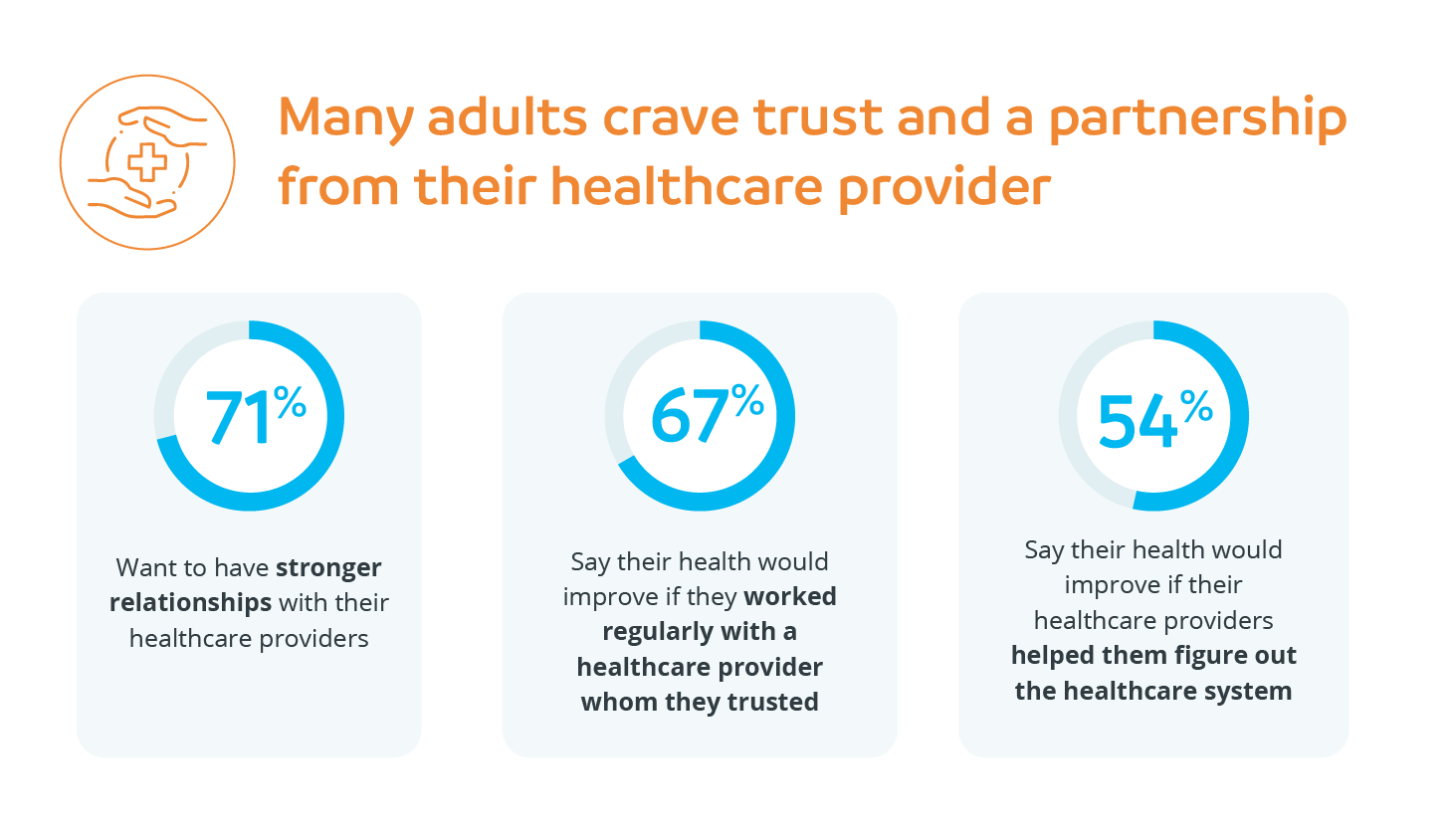
Source: Improve Patient Experience - Strategies | Performance Health (performancehealthus.com)
Four areas that shape patient experience
There is no single four-pillar framework used across every healthcare setting. For this article, the main influences on patient experience can be organized into four practical areas: environment, communication and expectations, care, and value and access.
- Environment: first impressions count, which is why hospitals and health services should create a welcoming environment for patients. Physical atmosphere has a direct impact on how people feel and, in a healthcare setting, can affect a person’s perception of how their care went. This goes beyond the non-negotiable of clinical cleanliness. Ensure staff are going above and beyond to treat patients with respect and friendliness and, in turn, creating a safe and comfortable environment.
- Communication and expectations: patients need clear information about delays, next steps, treatment processes and follow-up responsibilities. Healthcare teams may not always be able to prevent disruption, but timely and empathetic communication can reduce uncertainty and help patients make informed decisions.
- Care: patient care extends well beyond what happens in an operating room or rehab session. While clinical care is clearly crucial, every aspect of a patient’s visit needs to be taken into account including conversation and engagement. In the bid to deliver quality physical care, many health professionals forget to consider the emotional needs of a patient. Conversely, those who take feelings, fears and care goals into account stand out from the crowd.
- Value and access: patients experience value through more than the price of treatment. Appointment availability, convenience, coordinated care, understandable billing and clarity about costs all influence whether healthcare feels accessible and worthwhile.
Why does patient experience matter?
Patient experience matters because it can strengthen engagement with care, support financial and reputational performance, improve staff workflows, reveal safety concerns and reduce avoidable administrative friction.
- Stronger engagement with care: AHRQ reports positive associations between good patient-clinician communication and factors such as adherence, care processes and selected outcomes. However, many other factors also influence clinical results.[1] Patient experience should therefore be assessed alongside clinical quality and safety measures, not treated as a substitute for them.
- Financial and reputational value: Patient experience can influence recommendations, retention and publicly reported performance. In the United States, HCAHPS scores have also contributed to hospital payment through the CMS Hospital Value-Based Purchasing program since 2012.[2] This creates a direct operational reason to monitor patient experience without implying that experience alone determines profitability.
- Better workflows for staff: Repeated forms, fragmented communication and unclear handoffs create additional work for employees as well as patients. Improving these processes can reduce avoidable follow-up and give employees clearer information, tools and responsibilities.
- Additional insight into safety: Patient feedback can identify concerns involving communication, discharge instructions, care coordination, cleanliness or responsiveness that may not be visible through clinical data alone.[1] It should be reviewed alongside incident reports and formal safety measures.
- Less administrative friction: Clear communication, coordinated follow-up and accurate information can reduce repeated calls, duplicated forms, avoidable rework and unresolved inquiries. Organizations should measure these operational effects directly rather than assuming higher satisfaction automatically results in fewer treatments or readmissions.
How should healthcare organizations measure patient experience?
Healthcare organizations should combine standardized patient-reported experience measures with qualitative feedback and operational data.
- Standardized surveys: Use a validated survey suited to the care setting. HCAHPS, for example, measures areas including communication, staff responsiveness, care coordination, medicines, discharge information, hospital environment and overall ratings. More than 4,400 hospitals participate, and nearly two million patients complete the survey each year.[2]
- Focus groups: for deeper insights, hospitals and health services should consider assembling focus groups as it allows them to interact with patients in person. While they can be more difficult and costly to organize, the smaller sample group typically provides more expansive data that is easier to analyze than countless survey responses.
- Complaints and service-recovery data: Review formal complaints, contact-center inquiries, online feedback and service-recovery cases for recurring problems. Categorizing issues by service, location, channel and stage of the patient journey makes the feedback easier to act on.
- Patient stories: inviting patients to share their experiences via written, audio or video recordings is an excellent way for health services to gain more emotive insights into interactions. The non-threatening nature of patient stories invites people to speak from the heart and often reflect on the more positive aspects of their health journeys.
- Operational measures: Track appointment availability, wait times, abandoned calls, form completion, billing inquiries and complaint-resolution times. These measures help healthcare leaders connect patient feedback with the operational processes causing friction.
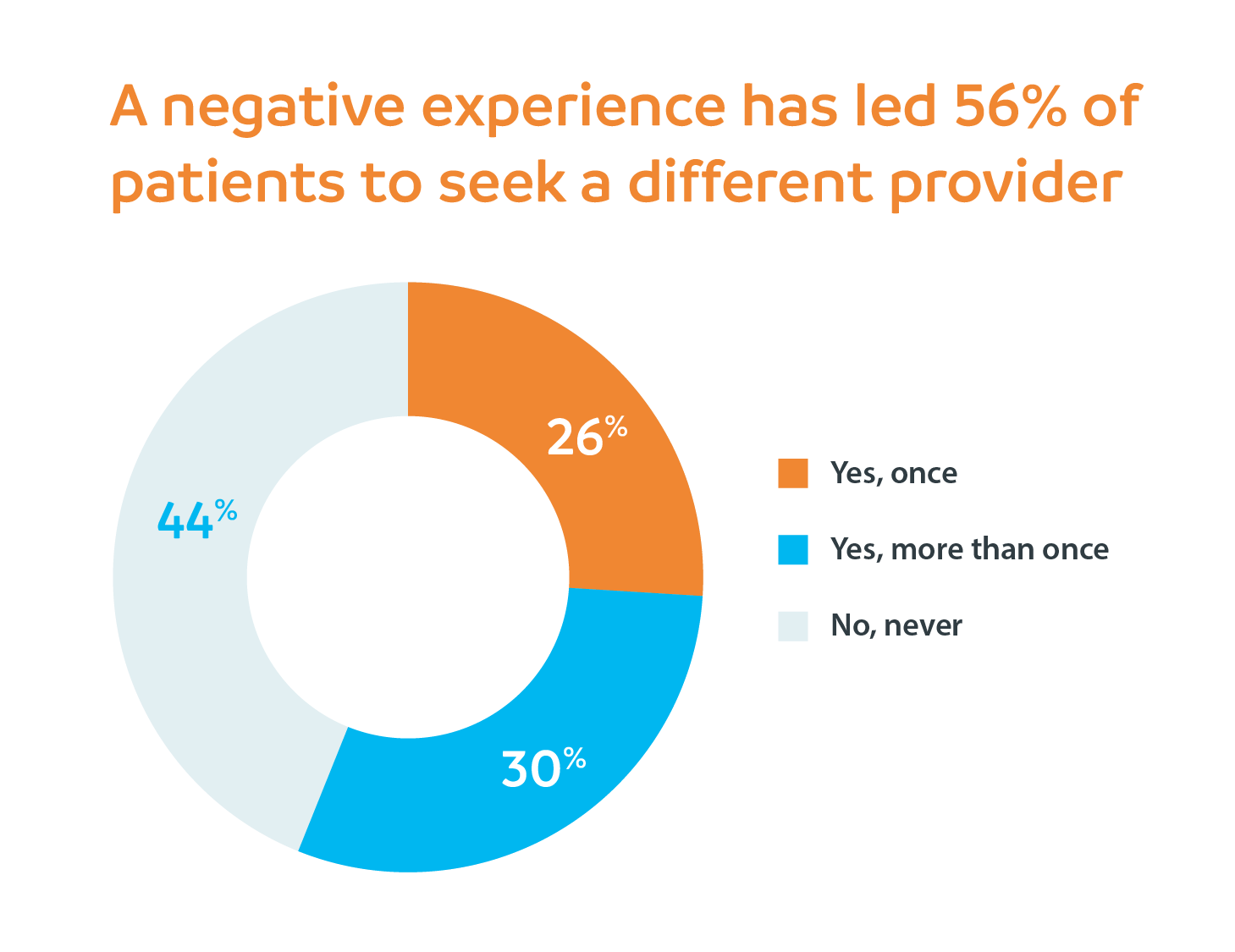
Source: Patient Satisfaction Survey Examples To Improve the Patient Experience (softwareadvice.com)
Five ways to improve patient experience
Healthcare organizations can improve patient experience in five practical ways: minimize waits, reduce repetitive paperwork, support employee engagement, use technology to simplify access and move suitable administrative work to dedicated support teams.
- Minimize wait times: one of the biggest reasons for unhappy patients happens before they even see a clinician. Reducing long wait times is a fast track to better patient experience so make every effort to avoid overbooking. If delays are unavoidable, ease the frustration by providing regular updates.
- Reduce paperwork: do you hate being asked to provide the same information every time you contact a service provider? The same goes for patients, which is why you should keep any necessary information or documents online and ask for confirmation rather than forcing them to repeatedly fill out forms. A dedicated administration support team can assist with forms, scheduling and document processing so patients and clinicians spend less time repeating routine information.
- Encourage employee engagement: there is nothing like an engaged employee to inspire confidence and calmness within a patient. Start by providing staff with the tools and systems they need to do their jobs before considering additional morale-boosting exercises such as recognition programs and skills develop programs.
- Use innovative technology: make life easier for staff and patients by embracing the latest tech. The likes of centralized electronic solutions for staff communication help deliver smoother care, while incident reporting systems that integrate with electronic health records reduce the need for time-consuming and unreliable paper forms. QR codes are another great innovation for self check-in and patient feedback.
- Use outsourcing to strengthen non-clinical support: Dedicated outsourced professionals can support scheduling, patient inquiries, medical transcription, coding and other administrative workflows. Increasing operational capacity can help healthcare organizations respond more consistently while allowing clinicians to concentrate on work that requires clinical judgment. Outsourced teams should operate with clear responsibilities, approved communication protocols, access controls, quality standards and escalation paths.
How outsourcing can support patient experience
Patient experience improves when every touchpoint, from appointment booking to post-care follow-up, works as part of one coordinated journey. Clinical care remains central, but delays, unclear communication and administrative friction can significantly shape how supported patients feel.
For healthcare organizations with limited internal capacity, a managed outsourcing partner can provide dedicated administrative, customer support and health information professionals, along with the operating environment and performance oversight needed to support consistent service. The healthcare organization should retain control of clinical decisions, privacy requirements, escalation procedures and patient-service standards. Healthcare leaders evaluating which functions to delegate can use this complete guide to healthcare outsourcing to assess suitable roles, governance requirements and implementation considerations.
Reference:
[1] Agency for Healthcare Research and Quality, “What Is Patient Experience?”, content last reviewed March 2025. https://www.ahrq.gov/cahps/about-cahps/patient-experience/index.html
[2] Centers for Medicare & Medicaid Services, “Hospital CAHPS (HCAHPS),” last modified April 21, 2025. https://www.cms.gov/data-research/research/consumer-assessment-healthcare-providers-systems/hospital-cahps-hcahps
FAQs
Who should be responsible for improving patient experience?
Patient experience should have an executive owner, but responsibility needs to be shared across clinical, administrative, digital, operations and support teams. A cross-functional governance group can prioritize improvements, assign accountability and prevent individual departments from addressing connected problems in isolation.
How often should healthcare organizations review patient feedback?
Urgent safety or service concerns should be escalated immediately. Operational teams can review recurring feedback monthly, while leadership can conduct broader quarterly reviews to identify trends, assess improvement projects and allocate resources.
How should patient-experience data be segmented?
Data can be segmented by care setting, service line, location, communication channel, stage of the patient journey and relevant patient characteristics. Organizations should apply suitable privacy protections and minimum sample thresholds before reporting results for smaller groups.
What patient-experience standards should apply to outsourced teams?
Standards should cover response and resolution times, information accuracy, quality assurance, privacy, documentation, escalation procedures and patient feedback. Outsourced teams should be measured against the same approved service expectations as internal teams performing comparable work.
How can automation improve efficiency without making healthcare feel impersonal?
Automation works best for predictable activities such as reminders, routing, form collection and status updates. Patients should still have a clear path to a person when their request is complex, sensitive or requires clinical judgment.
Where should a smaller healthcare provider begin?
Start with one high-friction journey, such as appointment scheduling or billing inquiries. Establish a baseline, identify the one or two touchpoints creating the most work or frustration, implement a focused change and measure the result before expanding the program.