


Artificial intelligence (AI) is changing the workplace at a pace that can make even the most forward-looking organizations feel as though they are catching up. Tasks that once required hours can now take minutes. Information is easier to process, patterns are easier to identify, and customer interactions are increasingly supported by tools that can respond, recommend, and learn.
Yet for Haidee Enriquez, CEO of MicroSourcing Group and President of the Customer Experience Association of the Philippines (CXAP), the more important question is not how much work AI can take over. It is what people can do when technology takes care of more of the routine.
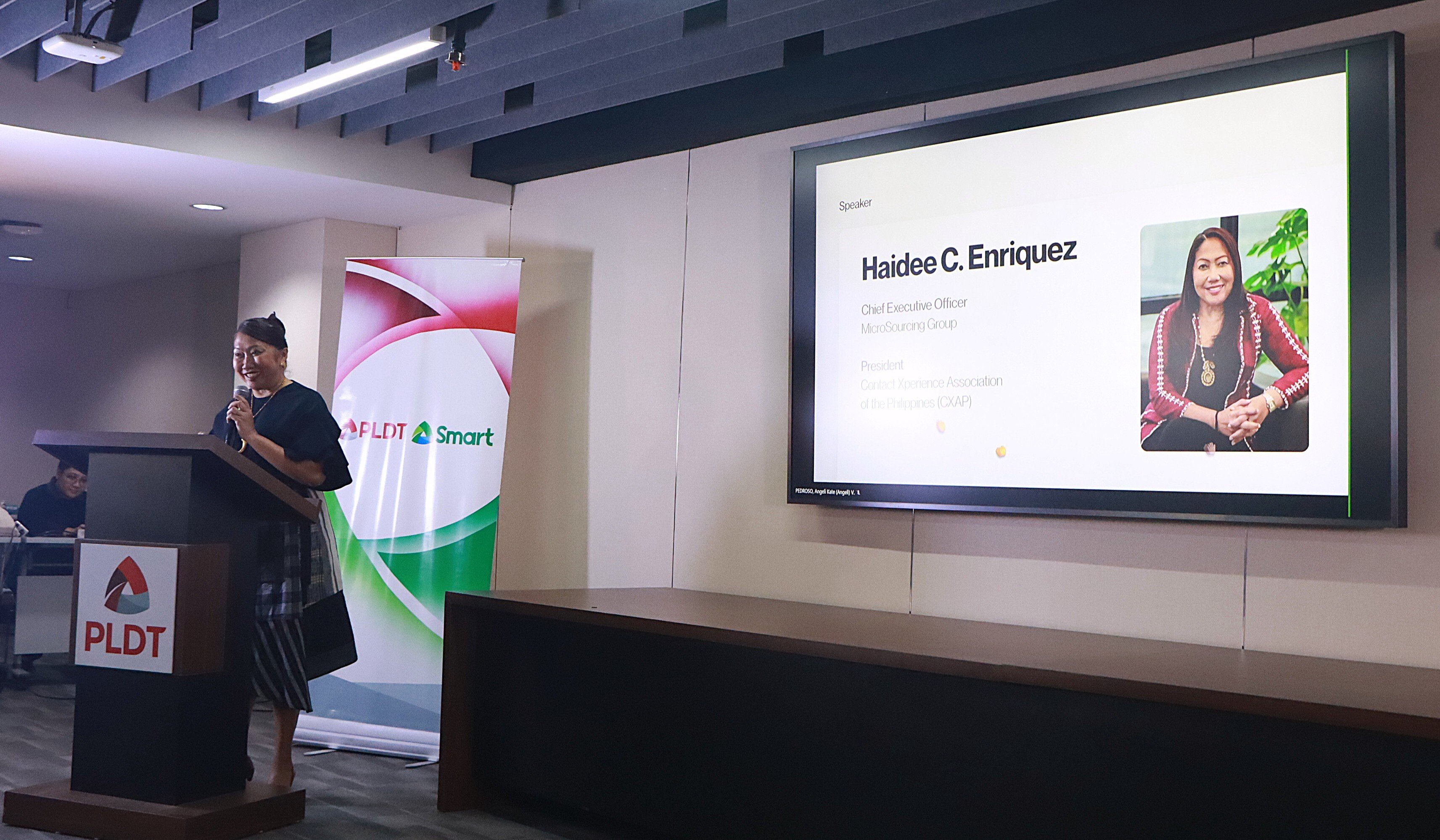 At a recent industry discussion on artificial intelligence and customer experience, the MicroSourcing Group CEO, Haidee Enriquez, made the case for a future where technology advances, but human judgment remains essential.
Enriquez shared this perspective at The Human Edge in the Age of AI, a special edition of the “PEG-Usapan Natin” learning series organized by PLDT and Smart as part of their Customer Experience Month celebration in October. The discussion brought together leaders from business, technology, and customer experience to examine how organizations can embrace AI while maintaining the human connections that shape meaningful customer experiences.
As automation becomes more capable of handling repetitive tasks, she explained, people will increasingly be called upon to solve complex problems, manage sensitive customer interactions, build relationships, and make decisions that require human judgment.
It is a perspective that moves the conversation beyond the familiar question of whether AI will replace jobs. The more immediate challenge for businesses is preparing people for how those jobs will change.
The value of T-shaped professionals
One of the capabilities Enriquez believes will become increasingly important is the ability to combine deep professional expertise with a broader understanding of technology and business.
She described the future workforce as one made up of T-shaped professionals: individuals with specialized knowledge in a particular discipline, supported by the ability to work across functions, adapt to new technologies, analyze information, and approach problems from different perspectives.
The idea reflects a shift in what organizations need from their people. Technical knowledge remains valuable, but the ability to connect that knowledge with other areas of work is becoming just as important.
An employee may be an expert in customer service, for instance, but understanding data, working with AI-enabled tools, and collaborating with technology teams can make that expertise more useful. Similarly, someone working in recruitment, operations, or finance can benefit from understanding how technology affects decisions and business outcomes beyond their immediate responsibilities.
For Enriquez, professional value will increasingly depend on more than what a person knows.
“Ultimately, your value will increasingly come from what you know, how you think, and how effectively you use technology.”
That distinction has implications for employers, too. Building a future-ready workforce calls for an environment where people are encouraged to learn, experiment, develop complementary skills, and remain open to changing ways of working.
When faster isn’t necessarily better
The conversation at the event also touched on an important distinction in customer experience - that efficiency and quality are not always the same thing.
Businesses have long measured customer service through response times, resolution rates, and operational productivity. AI can help improve many of these measures. It can make information more accessible, assist employees in finding answers, and reduce the time spent on repetitive administrative work.
But, according to Enriquez, customers do not experience a business through its efficiency metrics alone. They remember whether someone listened to them, whether their problem was understood, and whether the person handling their concern took responsibility for finding a solution.
These moments are particularly important when an interaction becomes complicated or emotionally charged. A customer may not know how to explain a problem clearly. The situation may require judgment that goes beyond a scripted response. Sometimes, what matters most is recognizing what has not been said.
The opportunity lies in giving employees better tools and more time to focus on the parts of customer experience that require their expertise. Rather than treating automation as an end in itself, organizations can use it to create better conditions for people to deliver meaningful service.
Preparing people for a workplace that keeps changing
For businesses operating in customer experience, business services, and outsourcing, the implications extend well beyond technology adoption.
The expectations placed on modern teams are changing. Businesses need people who can do their jobs well today while remaining capable of adapting to new tools, processes, and responsibilities tomorrow.
It also changes how organizations should think about talent. Finding people with the right technical qualifications is only part of the equation. Equally important is developing their ability to think critically, collaborate, communicate, and work confidently alongside emerging technologies.
For MicroSourcing and Beepo, these are relevant considerations in helping businesses build and grow their teams. As organizations reassess how work gets done, the conversation increasingly involves not just the number of people they need, but also the capabilities those people bring and how those capabilities can evolve with the business.
MicroSourcing Group CEO’s participation in the discussion reflects a broader industry conversation that the future of work will be shaped as much by how organizations develop their people as by the technologies they choose to adopt. The organizations best prepared for what comes next will be those that understand what technology can do, recognize what people bring, and know how to make the two work together.
