.svg "header-logo")


On April 28, 2026, industry, government, and education leaders came together for the Masterclass Session: Navigating the Global Digital Workforce, organized by the Center for Digital Iligan, Innovation & Sustainability in partnership with the Digital Creatives Hub Iligan.
Held in a hybrid format via Google Meet, the session brought together online participants and senior high school students from STI College Iligan, reflecting a shared focus on preparing emerging talent for a rapidly evolving global labor market.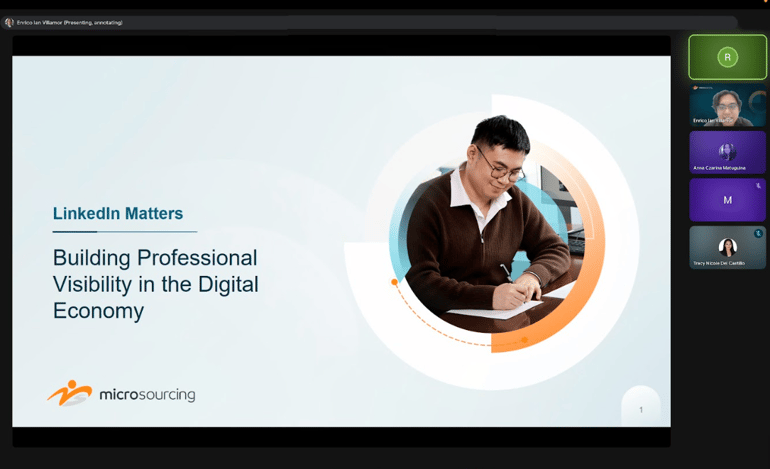
The discussion moved beyond theory. It addressed a more immediate question: how can local talent compete and succeed in a digital economy where opportunities are no longer defined by geography?
From Market Intelligence to Talent Positioning
A consistent theme across the session was the shift from supply-driven training to demand-driven workforce development.
Speakers emphasized that understanding global labor demand is now foundational. Market intelligence, including in-demand roles and client expectations, is shaping how individuals and institutions approach skills development.
Paul Hui Lagura, Head of the Center for Digital Iligan Innovation and Sustainability and Management Partner at the Digital Creatives Hub Iligan, highlighted that the real challenge is not the availability of talent, but how that talent is positioned within the global market. This framing underscores a broader shift in workforce readiness, where visibility and alignment with demand are as critical as capability itself.
Building on this, Enrico Ian Villamor, Market Intelligence Manager at MicroSourcing, highlighted how workforce trends are evolving:
Together, these perspectives point to a more deliberate approach to workforce readiness. It is no longer enough to acquire skills. Talent must understand where those skills fit within the global market and how they translate into real opportunities.
Professional Visibility as a Career Accelerator
A key highlight of the session was the focus on professional visibility, particularly through platforms like LinkedIn.
Gail Cruz-Macapagal, recognized as one of the 100 Most Influential Filipino Women on LinkedIn, emphasized that visibility plays a direct role in creating access to opportunities and enabling professional growth. Participants were guided on how to build credibility through consistent online presence, clear communication, and intentional personal branding.
This includes optimizing profiles, sharing relevant insights, and actively engaging with professional networks. In a digital-first hiring environment, visibility is no longer optional. It is a critical layer of employability.
Strengthening Workforce Ecosystems Through Collaboration
Beyond individual readiness, the session also explored the role of ecosystem development in driving long-term competitiveness.
Support from local leadership reinforced this direction. Darwin Manubag emphasized the importance of collaboration between government, industry, and academia in preparing Iligan’s workforce for global opportunities through skills development and digital readiness.
The concept is straightforward but impactful. When institutions operate in alignment, they create interconnected systems that provide not just training, but also access to tools, mentorship, networks, and real employment pathways.
These ecosystems enable talent to move from capability to opportunity more efficiently
Bridging Talent and Opportunity with Market Intelligence
Practical guidance was also provided on navigating labor market systems and employment platforms by Lace Arellano, reinforcing the importance of accessible data and structured career pathways.Participants engaged in an open forum, raising questions on career direction, global employment trends, and how to build sustainable professional growth in a competitive landscape.
The discussion made one point clear. Workforce readiness today is not defined by education alone. It is shaped by how effectively individuals and institutions use data, technology, and networks to connect talent with opportunity.
Looking Ahead
The global workforce is becoming increasingly borderless, competitive, and data-driven. For individuals, this means continuously aligning skills with market demand and investing in visibility. For institutions, it requires building ecosystems that support not just learning, but employability.
The Iligan masterclass demonstrated that bridging the gap between talent and opportunity is possible. It begins with clarity, collaboration, and a shared focus on positioning talent where it matters most.
For MicroSourcing, participating in conversations like this reflects a broader role beyond service delivery. It is about contributing market intelligence, sharing real-world hiring signals, and helping shape how talent is prepared for global work environments. As workforce expectations continue to evolve, this kind of engagement ensures that local talent is not only skilled, but aligned with how global organizations hire, operate, and grow.
In that context, initiatives like the Iligan masterclass are not one-off events. They are part of a larger shift toward building globally competitive talent ecosystems, where industry insight and local capability move in step.