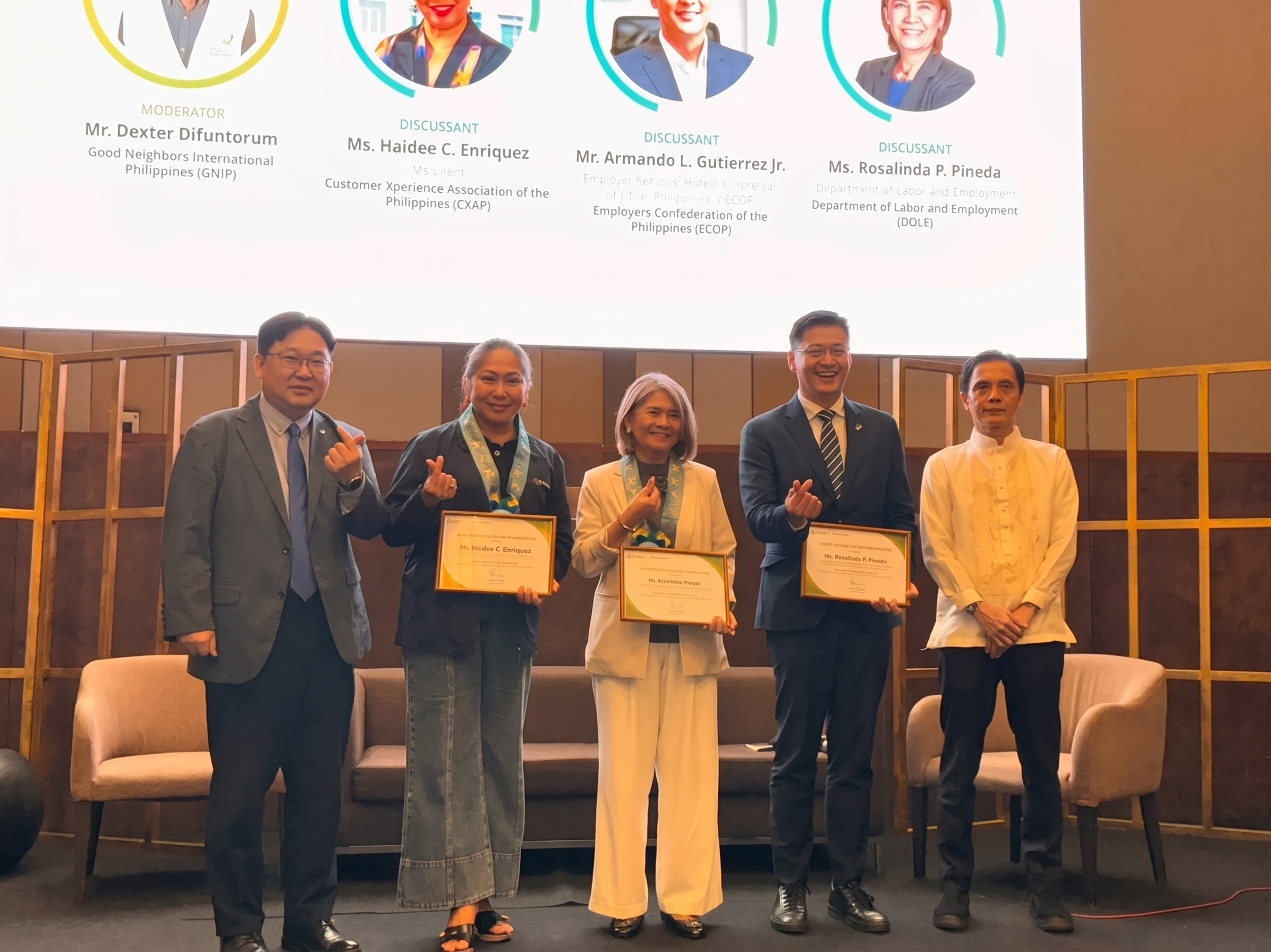
As artificial intelligence reshapes the workplace and employers rethink the skills they need, one question deserves equal attention: how can young Filipinos who have left school early find their place in the changing world of work?
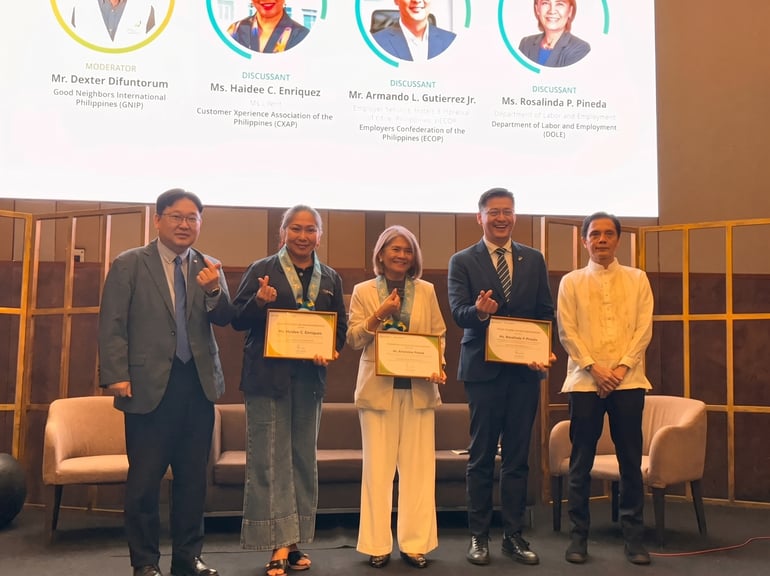 MicroSourcing CEO Haidee Enriquez (second from the left) joins government and industry leaders in exploring how employers can widen access to decent work, recognize skills beyond formal credentials, and prepare young Filipinos for an evolving workplace.
For Haidee Enriquez, CEO of MicroSourcing, part of the answer lies in how employers define potential.
Speaking at the OSY Summit 2026 on November 13 at Novotel Hotel Araneta Center in Quezon City, Enriquez joined representatives from government and industry for a panel discussion on creating more accessible employment pathways for out-of-school youth (OSY).
Held under the theme Nurturing and Bridging the Dream for a Better Future: Employer Partnerships, Workforce Readiness, and Inclusive Pathways to Decent Work, the summit examined how young people can access decent work, remain employed, and build meaningful careers through stronger employer partnerships and workforce development initiatives.
For Enriquez, making employment more accessible begins with a closer look at what employers actually expect from entry-level candidates.
“You don’t need to know everything on your first day. What matters is having the right foundations, being willing to learn, and having the discipline to keep improving,” she said.
In the business process outsourcing (BPO) industry, these foundations include communication, active listening, problem-solving, reliability, and the ability to follow instructions. Technical knowledge, familiarity with company systems, and specific customer service processes, meanwhile, can be developed through training and experience.
She also challenged the assumption that good communication is synonymous with perfect English.
This distinction is particularly relevant for young applicants who may have the aptitude for customer-facing roles but lack the confidence or formal experience typically associated with traditional hiring requirements.
Preparing people for a workplace shaped by AI
The discussion also turned to artificial intelligence and its growing influence on entry-level employment.
Across the BPO industry, AI-powered tools are increasingly helping employees summarize conversations, retrieve information, suggest responses, and handle routine inquiries. While these developments are changing how work gets done, Enriquez believes they also make human capabilities more valuable.
She pointed out that while AI can recommend a response or surface relevant information, employees must still know how to assess whether that information applies to a particular situation. Handling a frustrated customer, recognizing when an issue needs escalation, and making responsible decisions require judgment that goes beyond simply following a suggested answer.
For young people entering the workforce, this means developing digital literacy alongside the ability to adapt, think critically, and communicate effectively. It also places responsibility on employers and training institutions to make technology and AI literacy part of practical workforce preparation.
Looking beyond diplomas and work experience
One of the more important considerations in building inclusive employment pathways is how candidates are evaluated in the first place.
A college degree or previous work experience may be necessary for certain positions, but they should not automatically become barriers to roles where those qualifications are not essential.
Enriquez encouraged employers to consider practical assessments that allow applicants to demonstrate their capabilities. Simulated customer conversations, basic computer exercises, and workplace problem-solving scenarios can offer a more direct picture of a candidate’s potential.
For OSY candidates, this approach can help make recruitment more accessible while allowing employers to identify talent from a wider pool. However, creating an opportunity does not end with a job offer.
First-time employees often need additional support as they adjust to workplace expectations, learn new systems, and build confidence. Structured onboarding, accessible training, mentorship, and regular coaching can make a meaningful difference in helping them stay and grow.
Employers must also recognize practical circumstances that can affect retention, including transportation costs, work schedules, caregiving responsibilities, and accessibility needs.
For MicroSourcing, these conversations reflect a broader consideration for the outsourcing industry to build a capable workforce requires more than finding people to fill available positions. It means creating an environment where people can develop their skills, contribute meaningfully, and pursue opportunities for career growth.
Turning partnerships into pathways
The summit underscored that expanding employment opportunities for out-of-school youth requires coordinated action. Employers can help identify in-demand skills and offer accessible hiring pathways, while government agencies, local governments, and training providers can connect young people to relevant programs and employment opportunities.
During the panel’s commitment round, Enriquez outlined a concrete action that the Contact Xperience Association of the Philippines (CXAP) could pursue within the next 12 months, which is working with member companies and government partners to connect OSY with skills training and employment opportunities.
The initiative would begin by identifying suitable entry-level roles, understanding the competencies employers need, and helping young people access appropriate training and recruitment channels.
For an industry that continues to evolve alongside technology, investing in people remains essential. And as the definition of employability changes, so should the ways employers recognize talent. Creating more inclusive pathways means giving people the opportunity to show what they can do and supporting them as they discover what else they can become.
About MicroSourcing Group
MicroSourcing Group is an offshore build-to-scale and managed solutions partner to SMEs and mid-market companies, delivering highly skilled professionals by leveraging our deep labor market knowledge and recruitment expertise. As a pioneer in this non-traditional offshoring model, we have a proven track record in building reliable and ethical extensions of global businesses, enabling profitable growth for clients.
Through its brands, MicroSourcing and Beepo, the Group’s network of 10,000+ professionals supports over 1,000 clients across 13 delivery centers in the Philippines and Colombia. Our corporate presence spans six global locations, with teams operating under a unified framework for governance, data security, and service delivery. Backed by a pool of 200,000+ job-ready candidates and recruitment experience across industries, business sizes, and role complexities, we scale operations from a single hire to enterprise levels, providing the talent, infrastructure, and operational backbone required for growth.