.svg "header-logo")

In the high-growth landscape of the Philippine IT-BPM sector, the traditional boundaries of Corporate Social Responsibility (CSR) are being redrawn. While the industry has long been a pillar of economic stability, at MicroSourcing, we are moving beyond the era of discretionary donations toward a model of systems-based intervention.
As a pioneer in offshore build-to-scale and managed solutions, we believe that the same precision we use to scale our clients' businesses should be applied to our communities. Through our two flagship initiatives, Project Banaag and Project Kan-on, we are leveraging our operational expertise to address two of the nation’s most persistent structural gaps: education and food security.
Project Banaag: From logistics to literacy
The foundation of any thriving economy is an educated youth, yet hurdles to literacy and digital inequity remain. At MicroSourcing, our response to this challenge is one of constant evolution.
Project Banaag, launched in its current form in August 2025, is the strategic successor to our "Balik Eskwela" program. Since 2019, that initiative has established a massive logistical footprint, distributing 3 million school supplies to 10,000 beneficiaries across the Philippines' most underserved communities.
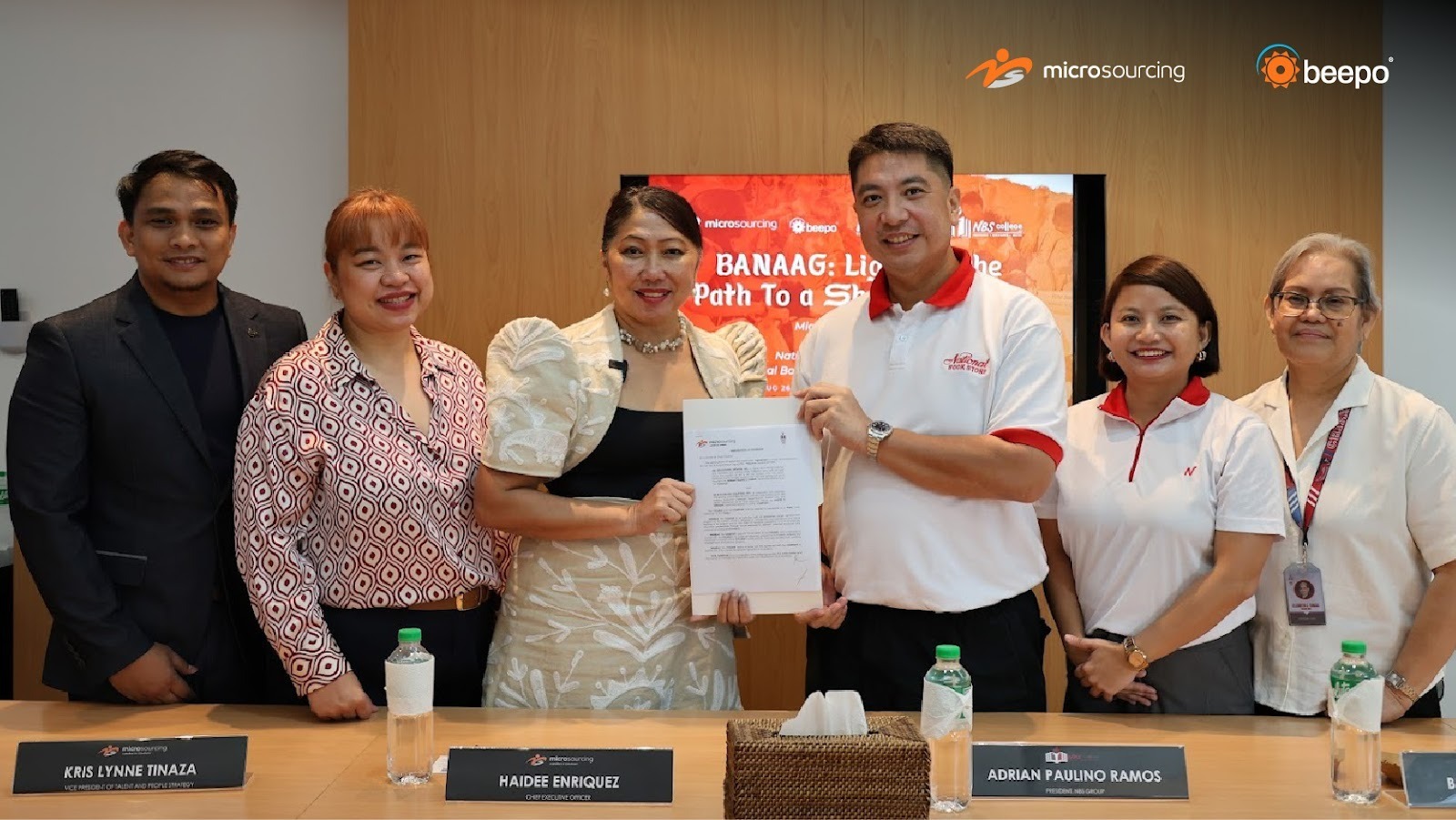
However, the transition to Project Banaag marks a shift from providing tools to building ecosystems. Partnering with the National Book Store Foundation, our program now operates through three strategic pillars:
- EduCare: Targeted literacy support, recently demonstrated at Aguho and Cayabu Elementary Schools, where 283 students received comprehensive learning packages.
- EduTech: Providing the digital hardware necessary for Filipino learners to compete in a globalized economy.
- EduLink: A mentorship framework that professionalizes corporate volunteerism. In February 2026, our employee-volunteers trained with Adarna House to master pedagogical techniques, ensuring their time in the classroom yields measurable educational outcomes.
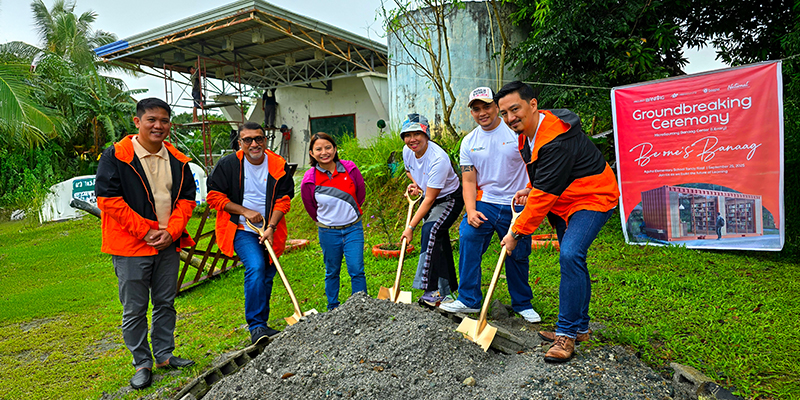
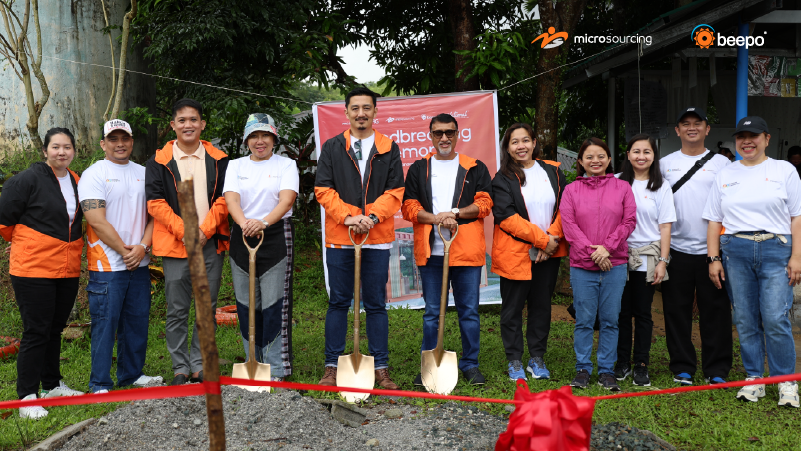
Our commitment to permanence was further cemented with the groundbreaking of a new Community Library, transforming a corporate contribution into a long-term civic resource for the next generation.
Project Kan-on: Strengthening the agricultural spine
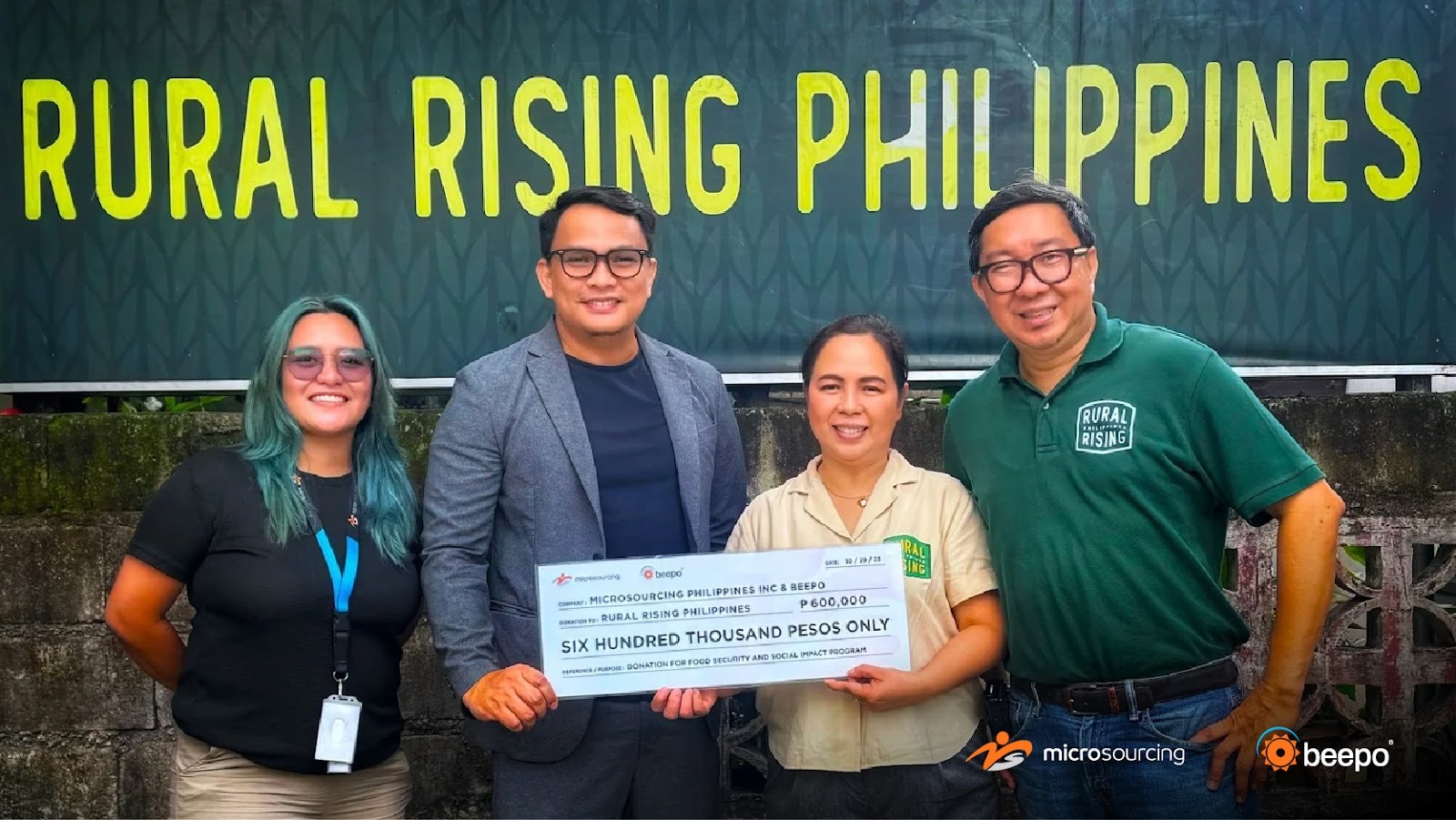
While Project Banaag secures the future workforce, Project Kan-on addresses the immediate stability of the Philippines' agricultural heartland. Through our partnership with the grassroots non-profit Rural Rising Philippines, we have committed ₱600,000 to the Food Security and Social Impact Program.
The project addresses a heartbreaking reality in local agriculture: post-harvest losses.
Rather than merely buying surplus, Project Kan-on invests in the infrastructure of efficiency. On October 29, 2025, we facilitated a critical turnover of equipment to empower roughly 500 farmers and community members across Luzon. Our investment includes:
- Processing units: Ovens, burners, and steamers to create value-added products.
- Cold chain logistics: Chillers and freezers to extend shelf life.
- Safety infrastructure: Electrical and plumbing upgrades to meet professional food-safety standards.
The impact of this partnership was on full display in January 2026 at our New Year Kick-Off Party in Pasig City. In a direct-to-consumer model, Rural Rising Philippines joined approximately 5,000 of our employees and their families, selling 300 kilos of produce directly to our team and generating ₱30,000 in sales for partner farmers. Through these new processing and storage systems, we aim to eventually prevent up to 500,000 kilos of produce from going to waste.
A model for sustainable change
The common thread between these projects is a rejection of the "quick fix." By applying the same "build-to-scale" logic we use for our global SME and mid-market clients, we are building reliable and ethical extensions of the community.
As Atty. John Joenelle Nudo, MicroSourcing’s ESG Leader, emphasized, our goal is to "stabilize farmers’ income and keep food from spoiling before it reaches consumers”. It is a sophisticated, human-centric approach to ESG that proves that when businesses invest in people and systems, the entire community rises.