.svg "header-logo")


That distinction matters as healthcare becomes an increasingly significant business expense. In 2025, average annual premiums for U.S. employer-sponsored health insurance reached $9,325 for single coverage and $26,993 for family coverage. Family premiums increased 6% in a single year[1].
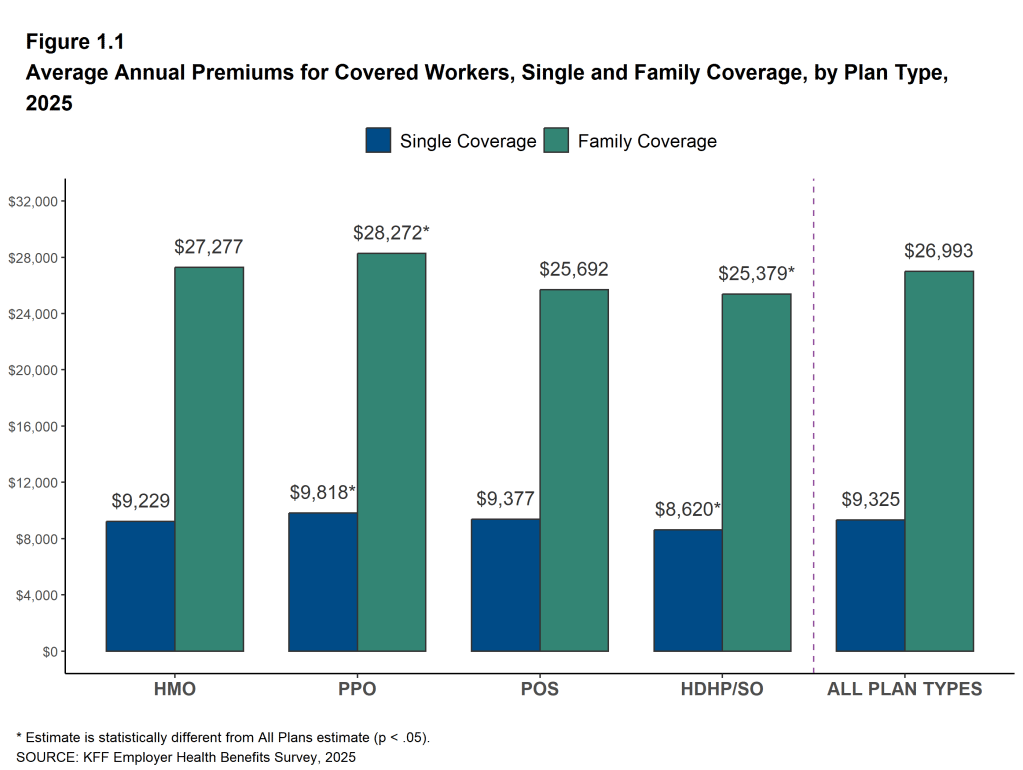
The pressure is continuing. Mercer reported that the average cost of employer-sponsored health benefits reached $17,496 per employee in 2025 and is expected to exceed $18,500 in 2026[2]. More recent preliminary research suggests employers expect another substantial increase in 2027[6].
For employers, the question is therefore no longer simply “How do we spend less on health insurance?” It is also “How do we manage healthcare benefits more efficiently without undermining their value to employees?”
Outsourcing can be one part of that answer.
Content Guide
- Why are employer healthcare costs continuing to rise?
- What healthcare costs can employers actually control?
- 5 ways outsourcing benefits administration reduces healthcare costs
- What should employers keep in-house when outsourcing benefits administration?
- What other strategies can employers use to reduce healthcare costs?
Why are employer healthcare costs continuing to rise?
Employer healthcare costs are rising because both the price and use of healthcare services are increasing, alongside higher prescription drug spending and the cost of new treatments[4].
KFF reported that average family premiums increased 6% in 2025, compared with wage growth of 4% and general inflation of 2.7%. The average family premium was also 26% higher than it had been five years earlier[1].
Mercer has identified several factors contributing to continued cost growth, including healthcare price inflation, increased utilization, expensive new diagnostic and therapeutic treatments, provider consolidation and growing prescription drug expenditure.[4]
At the same time, healthcare remains an important part of the employee value proposition. SHRM's 2025 Employee Benefits Survey found that 88% of employers considered health-related benefits either “very important” or “extremely important” for their workforce.[3]
Simply reducing benefits or transferring more costs to employees can therefore create another problem. Employers need to look across the entire cost base and identify where there are opportunities to operate more efficiently.
What healthcare costs can employers actually control?
Employers cannot directly control the underlying price of medical care, but they can influence plan design, employee contributions, vendor arrangements, utilization strategies and the administrative cost of running their benefits programs.
The areas an employer can influence will vary according to its size, funding model and benefits structure, but commonly include:
- Plan design: deductibles, copayments, provider networks and other cost-sharing arrangements.
- Employer and employee contributions: how premium costs are divided between the organization and its employees.
- Plan and vendor selection: choosing insurers, brokers, benefits platforms and other providers based on cost, service and value.
- Employee education and navigation: helping employees understand plan options and choose appropriate, cost-effective care.
- Pharmacy strategy: reviewing prescription coverage, utilization and pharmacy arrangements.
- Benefits administration: the people, systems and processes required to enrol employees, maintain records, answer questions, produce reports and support benefits operations.
- Performance analysis: using claims, enrolment, workforce and vendor data to understand where money is being spent and whether programs are delivering value.
This final group of administrative activities is where outsourcing can have a particularly direct impact.
File name: employer-healthcare-cost-control-strategies.png
Alt text: Diagram of healthcare costs employers can influence including plan design, pharmacy strategy and benefits administration
5 ways outsourcing benefits administration reduces healthcare costs
Outsourcing benefits administration can reduce healthcare costs in five main ways: lowering the cost of routine administration, freeing internal HR teams to focus on cost management, improving benefits data, scaling operations more efficiently and maintaining employee support without continually adding local headcount.
It is important to separate this from the cost of health insurance itself. Outsourcing will not automatically lower an insurer's premium. Instead, it can reduce the cost and complexity of the work required to administer benefits, while helping internal teams manage the broader healthcare program more effectively.
1) Lower the cost of routine benefits administration
The most direct saving comes from delivering appropriate administrative work through a lower-cost operating model. Benefits administration involves a significant volume of recurring activity, including enrolment changes, employee record maintenance, payroll coordination, reporting, employee enquiries and documentation.
Rather than building additional local headcount to manage every part of this workload, employers can allocate suitable processes to a dedicated offshore team. MicroSourcing supports organizations in building offshore teams for administrative, HR and healthcare-related operational functions.[7]
The aim is not simply to reduce headcount. It is to match work to the right level of resource: keeping strategic and sensitive responsibilities with internal HR leaders while moving repeatable administrative processes to a team designed to handle them efficiently.
2) Give HR teams more capacity for cost management
Reducing administrative workload gives HR leaders more time to focus on the decisions that can influence overall healthcare spending. When experienced HR employees spend large amounts of time correcting records, preparing routine reports or managing straightforward benefits requests, that is time they cannot spend evaluating vendors, reviewing plan performance or identifying opportunities to improve benefits strategy.
This matters as employers place greater emphasis on managing high-cost claims and measuring whether health programs are delivering value.[4] An outsourced team can therefore support cost management indirectly: it handles defined operational workflows, while the internal team retains responsibility for plan design, vendor relationships, employee policy and strategic decisions.
3) Improve the data behind benefits decisions
A more structured administration model can also make benefits data easier to maintain, reconcile and use for decision-making. Benefits information often sits across enrolment systems, payroll platforms, insurers, brokers and other vendors. When reporting depends on heavily manual or inconsistent processes, internal teams can spend considerable time simply preparing information before they can analyse it.
Dedicated offshore support can assist with recurring reporting, data preparation, reconciliation and dashboard inputs, giving decision-makers a clearer view of areas such as:
-
enrolment and participation
-
employee contributions
-
plan utilization
-
recurring administration issues
-
vendor performance
-
workforce demographics
-
benefit uptake.
The strategic analysis should remain with appropriately qualified internal leaders and advisers, but better-organized operational data gives them a stronger foundation for those decisions.
4) Scale benefits operations without adding local headcount
Outsourcing can also help employers absorb increases in benefits workload without expanding the local HR structure at the same rate. Benefits administration often grows as an organization hires more employees, enters new locations, completes acquisitions or introduces new benefits. Annual enrolment periods can also create sharp temporary increases in workload.
A dedicated offshore team can provide additional capacity as these requirements change, making the operating model more flexible than repeatedly recruiting for local administrative roles. This is particularly valuable when the challenge is not the benefits strategy itself, but the volume of work required to execute it consistently.
5) Maintain employee support while improving efficiency
Cost efficiency should not mean making benefits harder for employees to access or understand. Poor administration can create its own costs. Delayed responses, inaccurate records and unclear processes generate repeat work for HR teams and frustration for employees.
A well-structured outsourced model can assign routine benefits enquiries and administrative requests to a dedicated support team, with clear workflows and escalation paths for sensitive or complex matters. This allows employers to improve the efficiency of benefits administration without removing the internal HR expertise employees need for higher-value or more sensitive issues.
Taken together, these benefits show where outsourcing can contribute to healthcare cost control. It does not change the underlying price of medical care, but it can reduce the cost of administering benefits, improve the information available to decision-makers and give internal HR teams more capacity to manage healthcare spending strategically.
What should employers keep in-house when outsourcing benefits administration?
Employers should generally retain ownership of benefits strategy, major vendor decisions, employee policy and organizational accountability, even when administrative work is outsourced. Outsourcing works best when responsibilities are deliberately divided. Tasks suitable for an outsourced support team can include:
-
benefits enrolment administration
-
employee data maintenance
-
routine benefits queries
-
payroll and deductions support
-
reporting and reconciliation
-
document preparation
-
provider and vendor administration
-
benefits communications support
-
recurring administrative workflows.
Activities that typically require closer internal ownership include:
-
healthcare and benefits strategy
-
plan-selection decisions
-
decisions about employee contributions
-
policy setting
-
sensitive employee cases
-
executive and workforce consultation
-
regulatory and legal decision-making
-
final vendor governance.
External teams can support many of those processes, but outsourcing should not remove accountability from the employer.
What other strategies can employers use to reduce healthcare costs?
Employers generally achieve better cost control by combining administrative efficiency with plan design, employee education, stronger data analysis and healthcare value strategies. Outsourcing should therefore form part of a broader approach rather than being treated as a standalone fix.
Review whether health plans are delivering value
Employers should regularly review plan utilization, employee feedback, cost trends and vendor performance instead of automatically renewing the same arrangements each year. Mercer's research shows that measuring the performance of health programs has become a major employer priority as organizations look for ways to manage rising costs without simply transferring them to employees.[4]
Help employees understand their healthcare options
Employees are better positioned to make cost-conscious decisions when they understand deductibles, copayments, provider networks, available plan options and where to go for different types of care. Clear benefits communication should therefore form part of a healthcare cost strategy, especially after changes to plan design.
Consider higher-value provider and plan options
Some employers are introducing health plans designed to direct employees toward providers selected for quality and cost.[5] Mercer reported in 2026 that 31% of large U.S. employers already offered or planned to offer at least one non-traditional medical plan in 2027, with a further 38% considering such approaches.[5] Whether these models are appropriate will depend on an organization's workforce and healthcare strategy, but they illustrate the broader shift from simply reducing coverage toward improving the value of healthcare spending.
Pay closer attention to prescription drug costs
Prescription spending is becoming an increasingly important healthcare cost driver.[2][4] Mercer reported that prescription drug spending among large employers increased by an average of 9.4% in 2025, with increased use of higher-cost medicines among the contributing factors.[2] Employers should work with their benefits advisers and relevant vendors to understand their pharmacy expenditure and whether current arrangements remain appropriate.
Evaluate the cost of administering benefits
Organizations should also calculate what it costs them to run their benefits program internally. That includes not only salaries but also recruitment, management time, systems, reporting workloads, repetitive processing and the time senior HR specialists spend on work that could be handled elsewhere.That is the comparison that determines whether benefits administration outsourcing creates genuine value.
How can MicroSourcing support benefits administration?
MicroSourcing helps organizations build dedicated offshore teams that can support administrative and healthcare-related operational functions while working as an extension of the existing operation.
MicroSourcing's healthcare outsourcing services include support across areas such as claims and benefits operations, member enrolment, administrative processes and other healthcare support functions. This model allows an organization to retain control of its healthcare strategy and employee policies while allocating defined administrative and analytical processes to a dedicated team.
The same principle is used across healthcare outsourcing more broadly: external teams take responsibility for appropriate operational processes so internal specialists can dedicate more of their capacity to higher-value work. For employers facing continued healthcare cost pressure, the opportunity is therefore bigger than negotiating next year's insurance premium. It is about examining the entire operating model surrounding employee benefits and asking where people, processes and data can work more efficiently.
References
[1] KFF, 2025 Employer Health Benefits Survey, 2025
[2] Mercer, National Survey of Employer-Sponsored Health Plans, 2025
[3] SHRM, 2025 Employee Benefits Survey, 2025
[4] Mercer, Employers are bracing for the highest health benefit cost increase in 15 years, 2025
[5] Mercer, Survey on Health and Benefit Strategies for 2027, 2026
[6] Mercer, preliminary 2026 National Survey of Employer-Sponsored Health Plans, 2026
FAQs
Does outsourcing benefits administration reduce health insurance premiums?
No. Outsourcing benefits administration does not directly reduce the premium charged by an insurer. It can reduce the administrative and workforce costs associated with managing a benefits program while giving internal HR specialists more time to focus on broader healthcare cost strategies.
What healthcare benefits tasks can employers outsource?
Employers can outsource many repeatable benefits administration tasks, including enrollment support, employee record maintenance, payroll coordination, reporting, reconciliations, and routine employee inquiries. More strategic decisions, such as plan design and benefits policy, should generally remain under internal ownership.
Can small and midsize businesses outsource benefits administration?
Yes. Outsourcing can be useful for organizations that need dedicated benefits support but do not need to keep every specialist role in-house. Whether it is cost-effective depends on administrative volumes, process complexity, and the type of support required.
How can employers reduce healthcare costs without cutting employee benefits?
Employers can focus on better plan design, employee education, vendor management, pharmacy costs, healthcare navigation, data analysis, and more efficient benefits administration before reducing coverage. The right combination will depend on workforce needs and the organization's benefits strategy.
What is the difference between healthcare outsourcing and benefits administration outsourcing?
Healthcare outsourcing typically refers to operational services performed for healthcare organizations, while benefits administration outsourcing supports employers with the processes required to manage employee benefits. Both models move appropriate repeatable work to specialized external teams, but they serve different business functions.
What should employers look for in a benefits administration outsourcing provider?
Employers should assess relevant HR capabilities, data security controls, recruiting standards, process governance, scalability, and the provider's ability to integrate with their existing team. Clear responsibilities, escalation procedures, and performance measures should be established before work is transitioned.